History
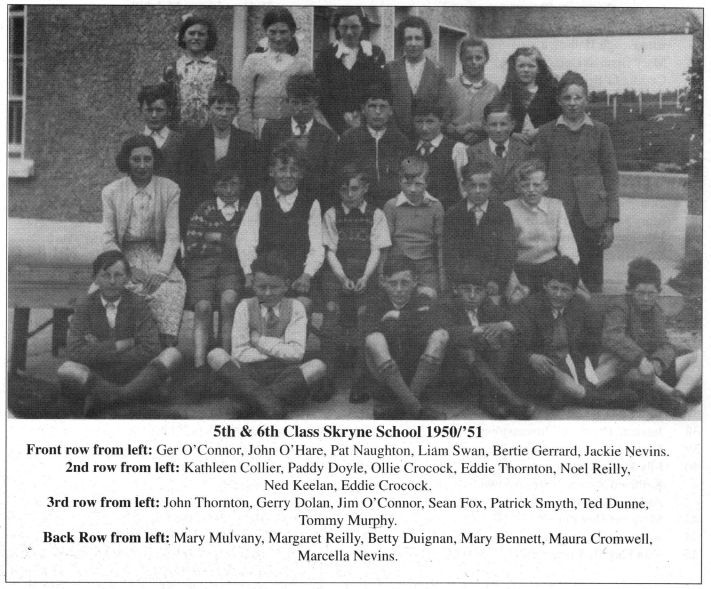
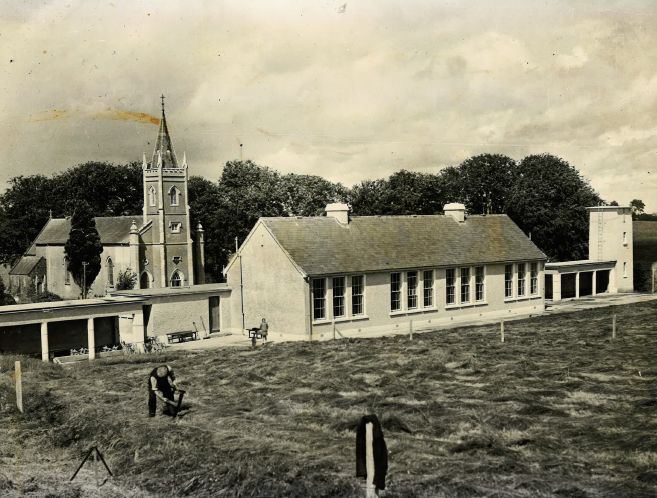
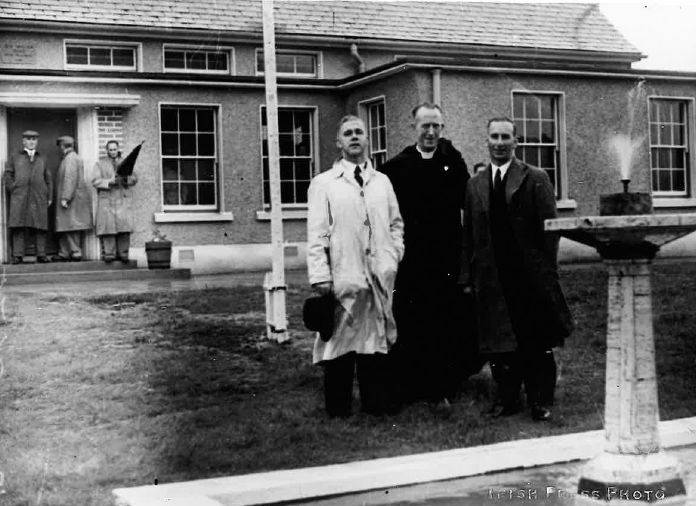
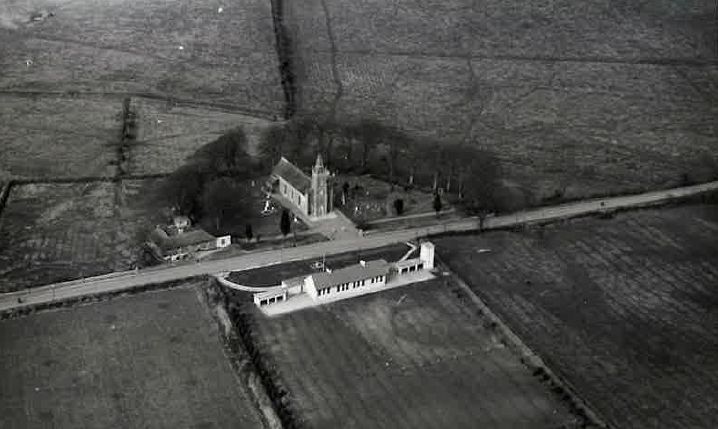
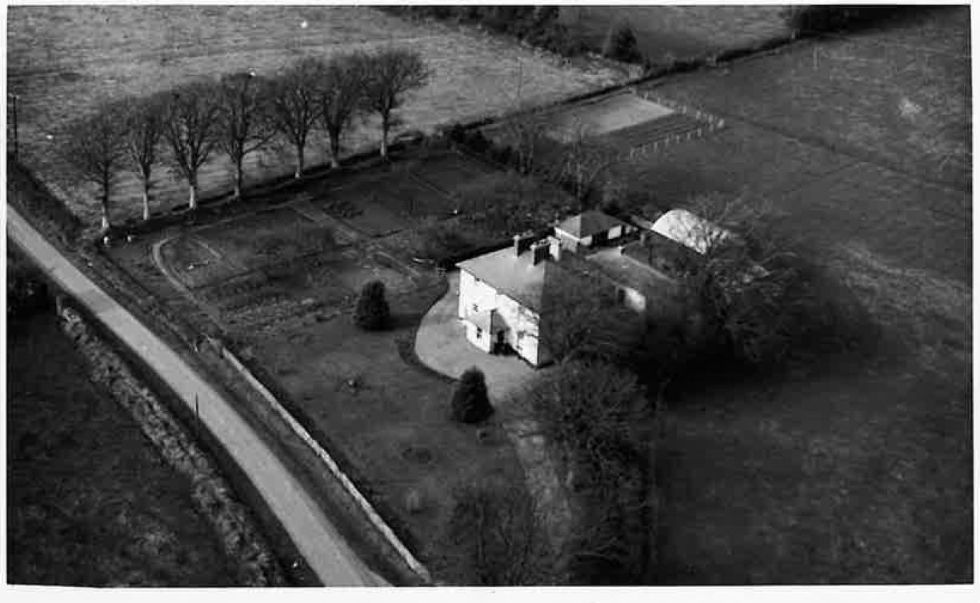
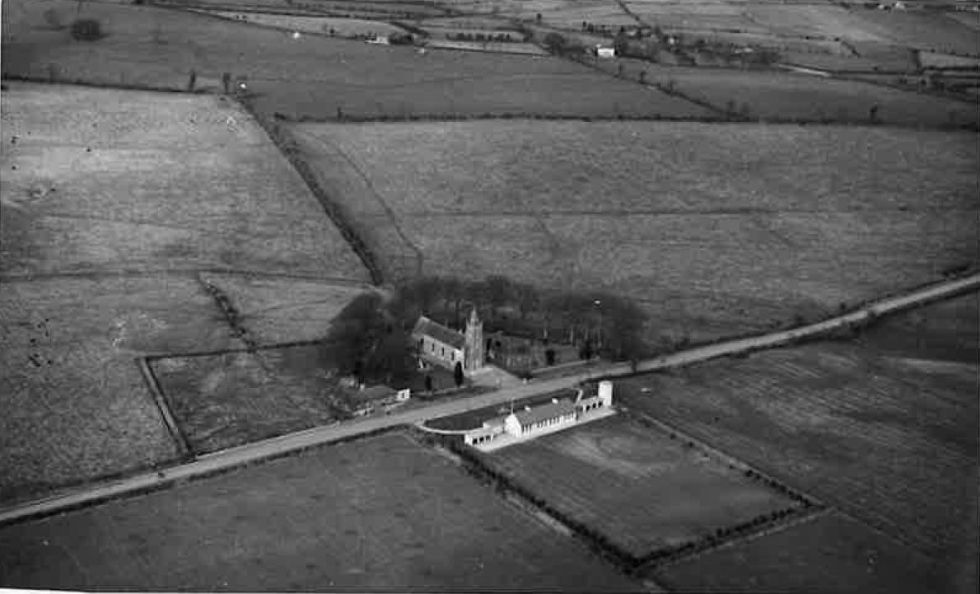
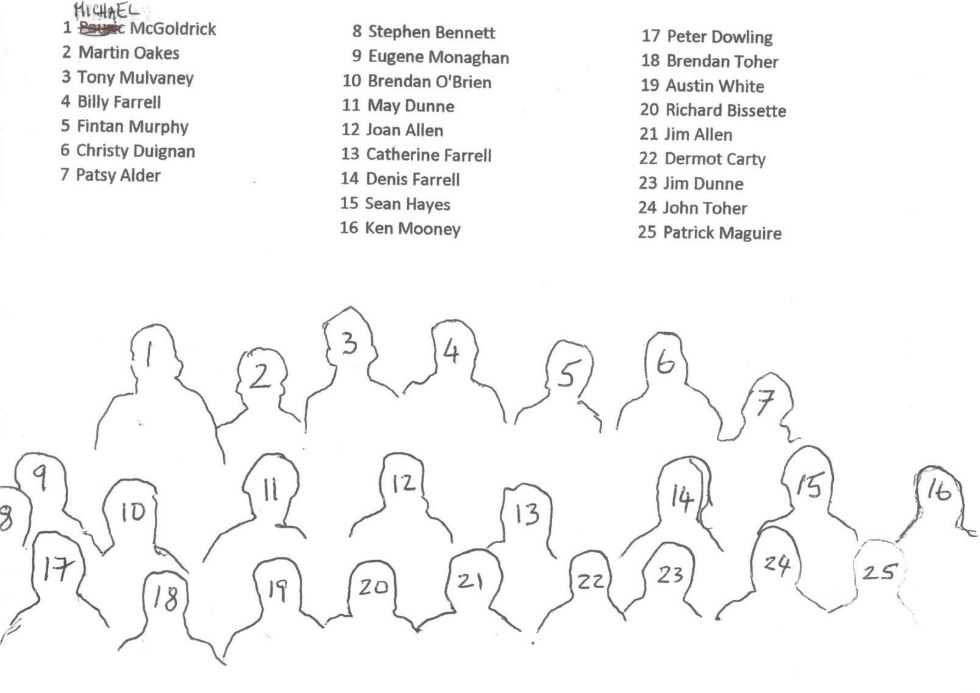
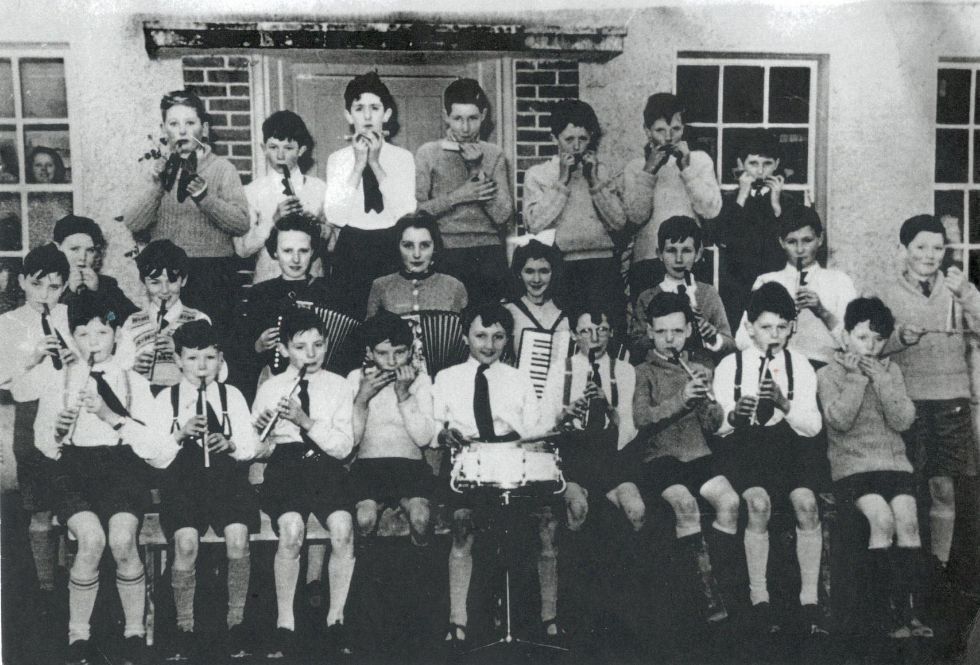
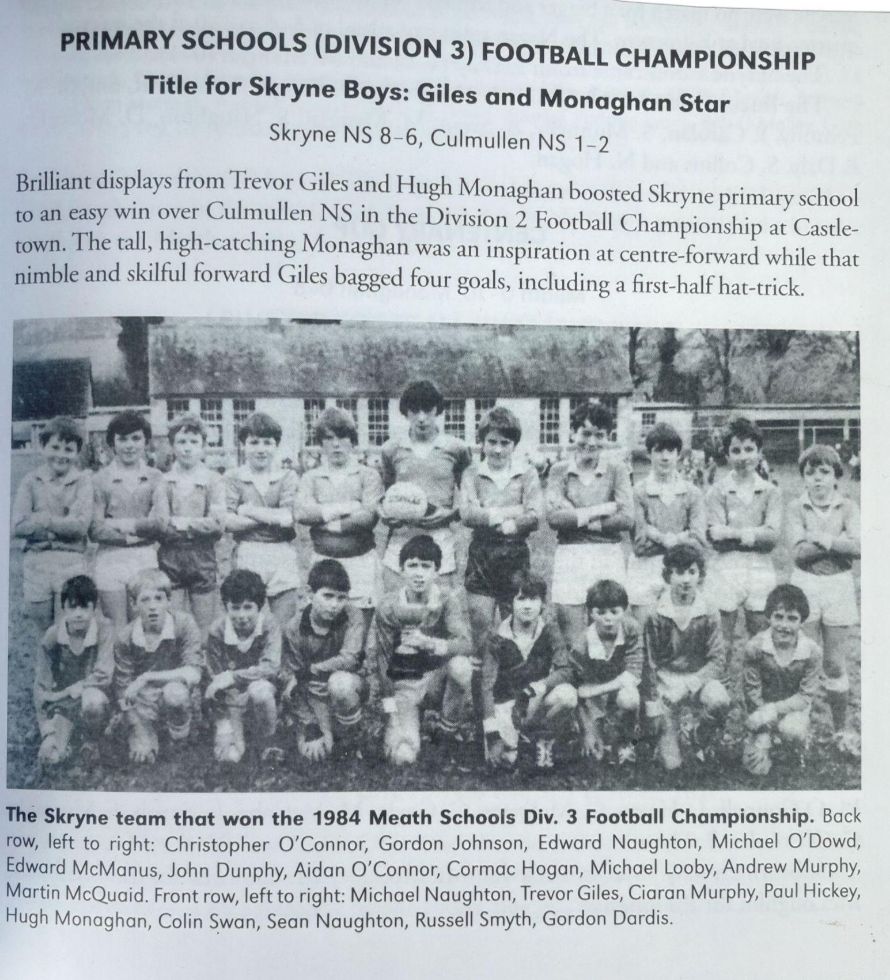
The original school was situated in what is now the hall. It was a two roomed building with two other very small rooms in it. There was no running water and so the toilets consisted of a pit at the back of the building which had to be emptied by someone who was employed for this purpose. One elderly female resident of Skryne commented recently that she was always scared that she would fall into the pit!
The basement below the two rooms was used to house the teachers’ ponies and traps and a man was employed to come in and feed them hay during the day and clean out the stable. Later on it was used as a bicycle store where those who cycled could leave their bicycles.
It is hard to ascertain when the school started but it was in existence during the latter part of the nineteenth century and finally ceased to be used in 1946 when a new school was built across the road. This new school was a model of its kind foe Meath – i.e. it was the first school of its particular design to be built in the county. This happened when Father Cooney was the parish priest. This school continued to be used until 2004 when it was replaced by the present building.
By Pru Symmons
1952 Times Pictorial article about Skryne school
How Skryne Got its Name
by Maurice Daly
The ancient name of Skryne was Achaill. In 76 AD, the “Four Masters” record the great battle of Achaill, in which Elim, the Usurper and a vast number of followers were slain by Tuathal Teachtmhar.
St. Patrick arrived at Tara in 432AD and an abbey was founded in Skryne shortly afterwards but we don’t have an exact date.
The earliest record of a monastery on the Hill of Skryne was when St.Colmcille – a great Donegal man- visited around 560 AD. It is probable that the monks in the monastery on the Hill of Skryne (Achaill) spent their time illuminating the Gospels just like in Kells, and that other monks farmed the land. It is also probable that the monastery was a centre of commerce for the local people which in time evolved into the town of Skryne.
The hill got its name in 875 AD, when the shrine with St. Colmcille’s relics and eucharistic vessels was conveyed back to Ireland from the monastery he founded in Iona, off the coast of Scotland , to protect it from the hands of the marauding Danes who were aware that Christian targets made suitable pagan prey. During this period, the monasteries were focal points of economic activity and storehouses of moveable goods.
To commemorate so great an event and mark the resting place of an heirloom so national and venerated, Achaill was henceforth called “Scrinium Sancti Columbiae” or the place of St. Colmcille’s Shrine.
The monastery at Scrín was plundered at least five times between 1027 and 1152, by both Irish and the Danes. In 1027, Skryne was raided by the Danes led by Roen and a large herd of cattle was carried off. In 1037, both Skryne and Duleek were plundered by the Danes from Dublin! In 1058, Skryne was pillaged by the men of Teaffia (an ancient kingdom in modern Westmeath), but we read that the “men of Meath slaughtered the men of Teaffia in revenge thereof.” The Danes from Dublin raided again in 1127 and this time the Shrine of Colmcille was carried off but quickly restored. We can therefore conclude that St. Colmcille is long associated with the parish of Skryne.
At the end of the 12th century, the conquest, bloodshed, extermination, colonisation and conquest of Ireland by the ruthless Normans began. Meath the fifth province of Ireland at the time, was devastated by the new invaders. Hugh de Lacy was granted Meath by the king and he divided it out among his knights. Adam de Feypo was granted Skryne. Adam built a chapel at Skryne to honour St. Nicholas, thereby introducing into Ireland the custom of giving formal titles to churches.
Adam also endowed St. Nicholas’ church with tithes (=one tenth) of all his possessions in Meath which he granted to his brother Thomas de Feypo, the first Anglo-Norman cleric in Meath. The de Feypo family were also given the title of Barons of Skryne. A flourishing Anglo-Irish town grew up in Skryne, due to the monastic settlements at both Skryne and Lismullin.
About 1341, Lord Francis de Feypo founded an Augustinian friary on the hill of Skryne and he granted some land from his demesne for a term of 99 years at a rent of a peppercorn annually to the friary. (A peppercorn rent was a token or nominal rent to keep the lease alive.) In the following year, Lord Francis founded a “perpetual chantry in the church on the Hill of Skryne for the health of his soul and the soul of his wife, Eyl de Verdon!” The Normans were Christians in theory but very far from it in practice!
In July 1539, the friary in Skryne was confiscated and dissolved on the orders of Henry VIII; the property passed to Sir Thomas Cusack and the town of Skryne gradually pined away.
The next time you venture up the Hill of Skryne and the imposing ruin of the Augustinian friary with its lofty square tower, nearly 100 feet in height catches your eye, you should pause and reflect on the wonderful heritage of 1,500 years that we have in the midst of the RST area. It no longer calls believers to worship but awakens Christian recollections and “casts a venerable shadow over the graves of the dead” since St.Colmcille first set foot on the Hill of Achaill.” The views from the hill are spectacular. It is surrounded by a circle of panoramic fertile plains with its sister hill of Tara dominating the sky to the west.
REFERENCES:
Diocese of Meath, Dean Cogan, Vol 1,
Atlas of Irish History, 3rd Edition, Sean Duffy.
A Window in the Past, Rathfeigh Historical Society,
Ríocht na Midhe, Vol 11, 1959- 1962.
RST Newsletter, July 2020.